

Key takeaways
- PSWs support daily living: personal care, mobility, meals, light housekeeping, reminders and company.
- Nurses (RNs and RPNs) provide clinical care and are regulated by the College of Nurses of Ontario.
- Most home care hours are PSW hours. Nursing is usually needed for specific tasks or check-ins.
- You can check a nurse on the College of Nurses of Ontario register, and many PSWs are on Ontario's public PSW register.
- A good plan starts with a nurse's assessment, even if a PSW provides most of the care.
1. What does a PSW do at home?
A personal support worker helps someone live safely and comfortably at home. Typical tasks include:
- Personal care: bathing, showering, dressing, grooming, oral care and toileting.
- Mobility: help getting in and out of bed, transfers to a chair or toilet, walking with a walker, and fall prevention.
- Meals: planning, cooking, feeding support and keeping an eye on how much someone eats and drinks.
- Medication reminders: prompting someone to take medication at the right time, often from a pharmacy blister pack, as set out in the care plan.
- Home help: light housekeeping, laundry, changing bedding and errands.
- Company: conversation, activities, walks and outings to appointments.
In Ontario, PSWs usually complete a college or approved training program. Learn more about our personal support worker services.
2. What does a nurse do at home?
Ontario has two kinds of nurses: registered nurses (RNs) and registered practical nurses (RPNs). Both are regulated by the College of Nurses of Ontario. At home, nurses typically:
- Assess health, safety and care needs, and write or update the care plan
- Provide wound care, dressing changes and catheter or ostomy care
- Give injections and manage complex medications
- Monitor conditions such as blood pressure, blood sugar or breathing, and flag changes to the doctor
- Teach the family and the PSW what to watch for
3. PSW and nurse side by side
| PSW | Nurse (RN or RPN) | |
|---|---|---|
| Focus | Daily living, safety and company | Clinical care and health assessment |
| Regulation | Not a regulated health profession; voluntary public register | Regulated by the College of Nurses of Ontario |
| Typical visit | Several hours, often regular days or shifts | Shorter visits for specific tasks or reviews |
| Medication | Reminders and help with pre-packaged medication, per the care plan | Assessment, injections and complex medication management |
| Overnight care | Common, including 24-hour shifts | Less common; usually for complex medical needs |
4. Which does your family need?
Think about the hardest part of a typical day:
- "Mum needs help showering and doesn't eat properly when she's alone." A PSW. See senior home care.
- "Dad came home from hospital with a wound that needs dressing." A nurse for the wound, and a PSW for bathing, meals and mobility while he recovers. See post-hospital care.
- "My husband has dementia and gets up at night." A consistent PSW, possibly overnight, with a nurse reviewing the plan.
- "She is lonely and has stopped going out." A PSW or companion for regular visits and outings.
If the stay at home started with a hospital discharge, ask whether nursing visits are funded through Ontario Health atHome. Our guide to public vs private home care explains how to ask.
5. How to check credentials in Ontario
- Nurses: search the College of Nurses of Ontario's public register, Find a Nurse, by name.
- PSWs: the Health and Supportive Care Providers Oversight Authority (HSCPOA) keeps a public register of PSWs. Registration is voluntary, so also ask to see the caregiver's PSW certificate.
- The agency: ask who supervises caregivers and who you call after hours. Our guide to choosing a home care agency lists 12 questions to ask.
6. How Artistic Home Care combines both
Our care is nurse-led. Every plan starts with a free, no-obligation in-home consult and an assessment by our registered nurse, who matches a qualified PSW to your loved one's needs, preferences and schedule. Visits start at 4 hours, we are available 24/7, and our caregivers speak English, Hindi, Punjabi and Urdu.
We serve families across Toronto, Mississauga, Brampton and the GTA. Book a free consult or call 437-985-6225.
Frequently asked questions
Can a PSW give medication?
A PSW can remind someone to take medication and help with pre-packaged medication as set out in the care plan. Injections and complex medication management are done by a nurse.
Do PSWs have to be registered in Ontario?
No. Registration with the HSCPOA public register is voluntary. Ask the agency about training, certificates and supervision.
Is a PSW the same as a caregiver?
"Caregiver" is a general word for anyone who provides care, including family. A PSW is a trained personal support worker.
Can a PSW stay overnight?
Yes. Overnight and 24-hour home care are usually provided by PSWs, with a nurse overseeing the plan.
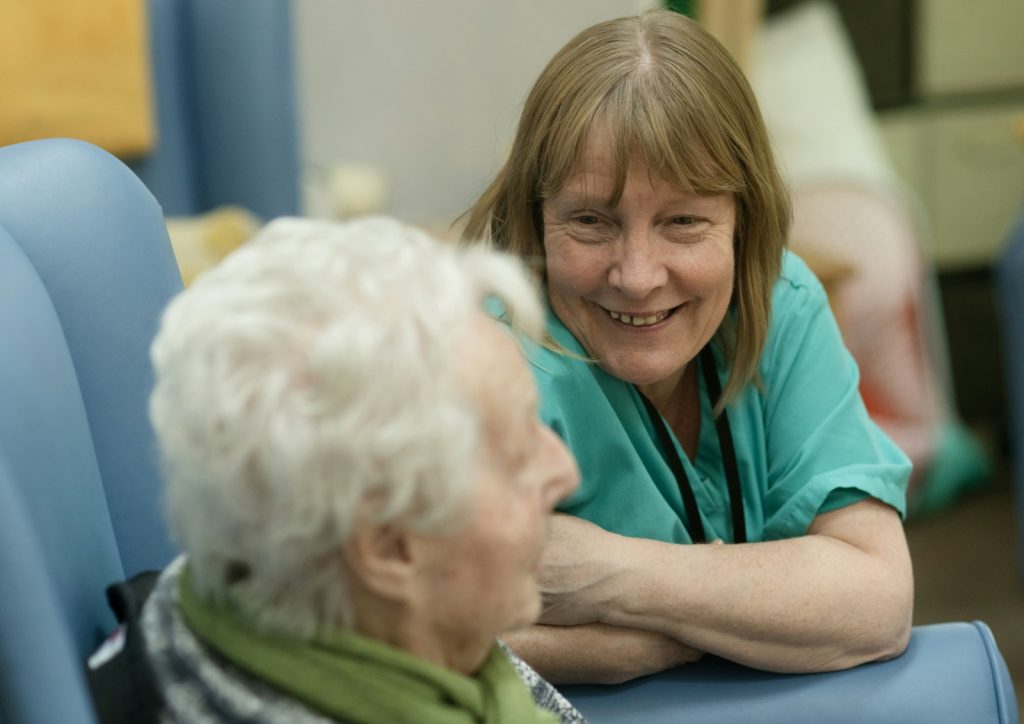
Cover photo: Age Cymru on Unsplash
Published 19 October 2026 · Last updated 19 October 2026