
Key takeaways
- Art therapy uses the creative process, guided by a trained therapist, to support wellbeing.
- No artistic skill is needed. The process matters more than the result.
- Creative sessions can offer relaxation, a sense of achievement and a way to connect.
- Simple activities such as watercolour, collage and clay can be adapted for arthritis, low vision and memory loss.
- Art works best as part of a regular routine, not a one-off.
1. What is art therapy?
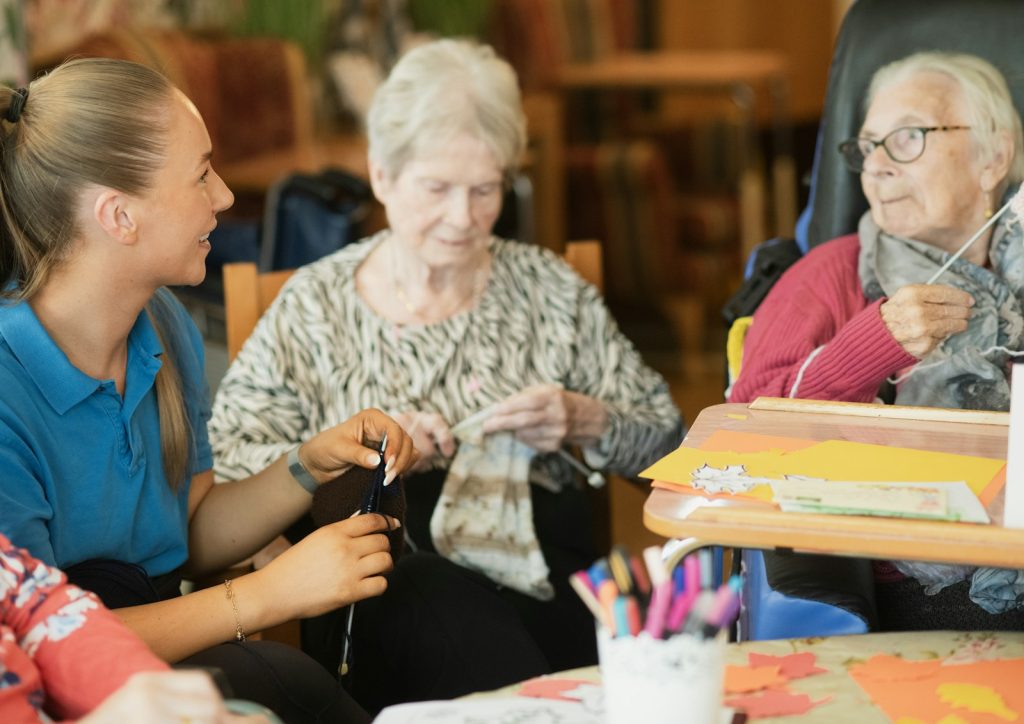
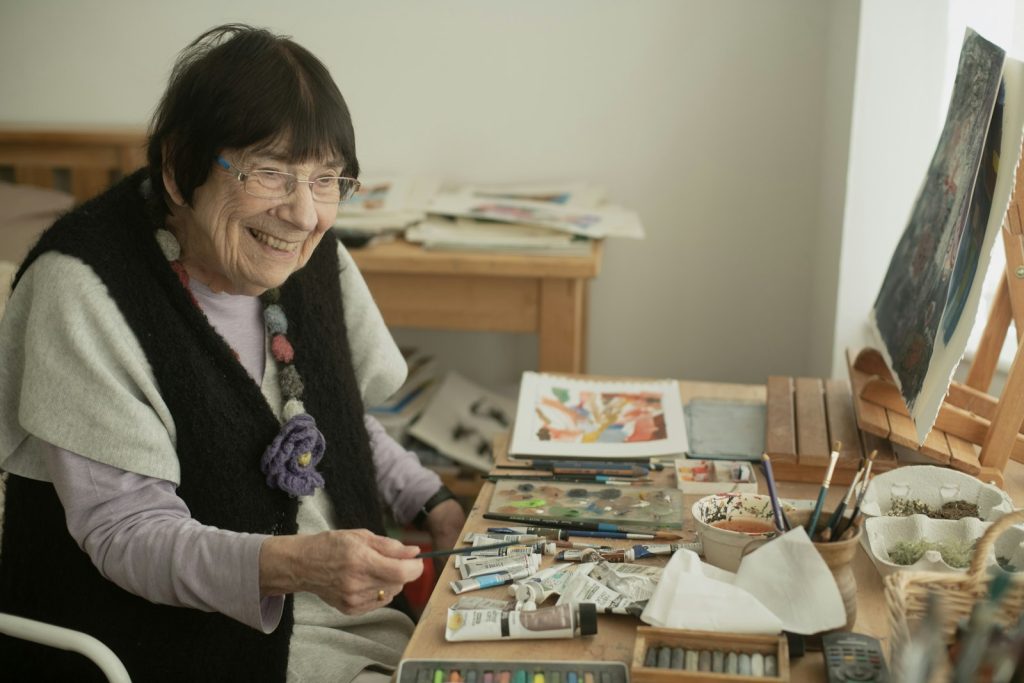
Art therapy uses painting, drawing, collage, clay and other materials to help people express feelings, relax and connect, guided by someone trained to support that process. It is different from an art class: the goal isn't a beautiful painting, but a meaningful and enjoyable experience.
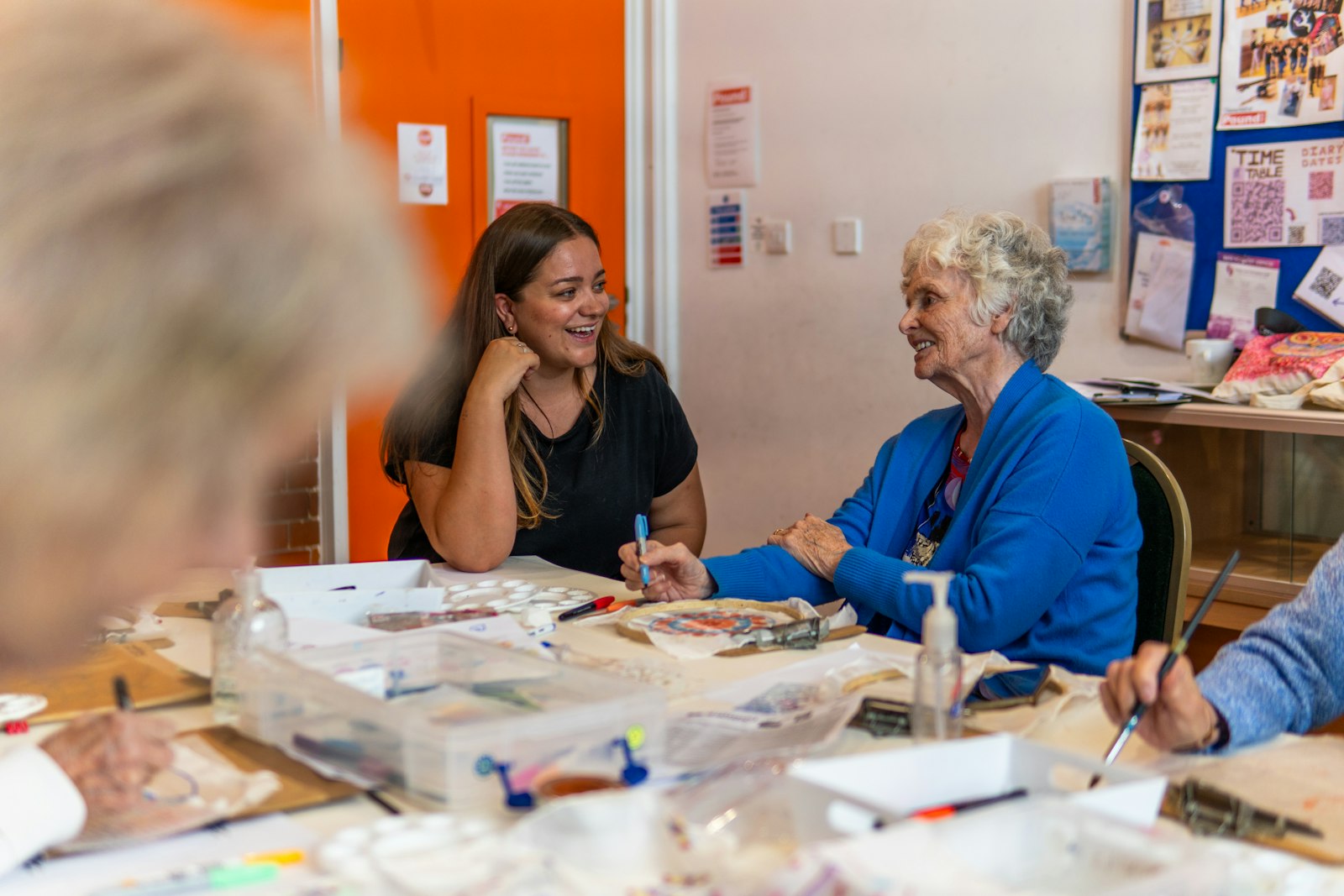
At home, families also use simpler creative activities without a therapist. Both have value. A trained facilitator adds structure, adapts activities to the person's abilities and mood, and notices what they communicate through their work.
2. How can art therapy help seniors?
Every person is different, and art is not a medical treatment. Many older adults and their families find that regular creative sessions can:
- Offer calm and focus. Mixing colours or shaping clay can be absorbing and soothing.
- Give a sense of achievement. Finishing something, and seeing it on the fridge, matters.
- Support connection. Creating side by side gives families and caregivers something to share beyond care tasks.
- Help express feelings when words are hard, for example after a stroke or with dementia.
- Keep hands moving. Brushes, scissors and clay are a gentle way to practise fine motor skills.
- Bring back memories through photos, familiar places and colours.
Shared creative time can be good for family carers too. If you look after a parent at home, read how respite care helps caregivers.
3. Eight simple art activities for seniors
- Watercolour washesWet the paper, drop in two or three colours and watch them blend. No drawing needed.
- Memory collageCut images from magazines, old cards or photocopied family photos and arrange them around a theme, such as "my first home".
- Painting a favourite placeA garden, a village, a view from a window. Talk about it while you paint.
- Air-dry clayRoll, press and shape small bowls or tiles. Clay is satisfying even for tired hands.
- Nature printsPaint leaves or flowers and press them onto paper.
- Drawing to musicPlay familiar songs and draw lines and shapes that follow the rhythm.
- Handmade cardsBirthday or festival cards for grandchildren give the activity a purpose.
- Colour journalA small notebook with one colour or shape each day to show how today feels.
4. Adapting art for different needs
| Need | What helps |
|---|---|
| Arthritis or weak grip | Chunky brushes, foam grips, sponges, large paper taped down |
| Low vision | Bold, contrasting colours, good daylight, textured materials |
| Memory loss | One step at a time, a finished example to look at, short sessions, no "mistakes" |
| Low energy | 10 to 15 minutes at the best time of day, seated, with everything within reach |
For more ideas on building activities into the day, see our dementia care daily routine.
5. Setting up a safe, easy art space
- Choose a well-lit table at a comfortable height, with a wipe-clean cover.
- Use washable, non-toxic paints and materials.
- Put out only what is needed for today's activity.
- Keep water in a heavy, stable container.
- Display finished work, and ask before throwing anything away.
6. Art therapy with Artistic Home Care
Creativity is part of who we are. Every care plan can include optional art therapy for seniors, guided by a wellness art therapist specialized in senior care. Sessions happen at home and are adapted to each person's abilities, energy and interests, including people living with memory loss through our dementia care.
Art fits naturally alongside companionship care and regular PSW visits. We serve families across Toronto, Etobicoke, Mississauga and the GTA. Book a free consult or call 437-985-6225.
Frequently asked questions
Does my parent need to be good at art?
Not at all. Art therapy focuses on the experience, not the result.
Can art therapy help people with dementia?
Creative activities can offer a calm, enjoyable way to connect and express feelings, which many families value. Sessions should be adapted to the person's stage and mood.
How long is an art therapy session?
It depends on energy and attention. Many sessions are shorter for people living with dementia, with breaks as needed.
Can art therapy be added to home care visits?
Yes. With us, art therapy is an optional part of any care plan.
Cover photo: Centre for Ageing Better on Unsplash
Published 19 October 2026 · Last updated 19 October 2026